Monthly Archive for May, 2009

“Integral?”

Question: What does “Integral” mean? What’s the difference between integral, integrative, holistic, mind/body, wellness, etc.?

My answer: As I use the term, “integral” refers to any approach that brings together multiple perspectives in an effort to address the multiple dimensions of human life. In this sense, the term “integral” is basically interchangeable with “integrative” and “holistic.” As a matter of personal preference, I like the term “integral.” I graduated from the California Institute of Integral Studies, which is grounded in the Integral Psychology of founder Haridas Chaudhuri, and I’m also a big fan of Ken Wilber’s “four quadrant” integral theory.

In general, however, the terms integral, integrative, holistic, mind/body, and wellness are all meant to convey “whole person” approaches to health and healing, as opposed to the disease-focused system associated with conventional medicine.

Keeping in mind that most, if not all, healthcare practitioners—whether in conventional settings or integrative health centers—would claim to be treating the “whole person,” I agree with the following distinctions Dr. Elliott Dacher makes between conventional, complimentary and alternative, integrative, and integral approaches:

[Article featured on Davi Nikent.org]

The evolution of medicine in modern times has been from allopathic or conventional, to alternative and complementary, to integrative and now to integral.

These can be defined as:

Conventional: The traditional approaches of medical science.
Alternative and Complementary: Healing approaches outside of the mainstream of western medical science.
Integrative: The merging of conventional, alternative and complementary approaches under a single “umbrella” of care.

Each of the preceding approaches, as they are currently and predominantly practiced in western culture, primarily focus on the biological or physical aspects of healing, emphasizing the role of professionals and their specialties, remedies and therapies in the treatment of physical disturbances. It is the recognition that these approaches have not addressed the whole person and therefore limit what can be achieved in health and healing that has driven the development of an integral approach.

Integral: The expansion of the health and healing process to address the entire range of the human experience: biological, psychospiritual, relational and cultural. All are seen to contribute to the disease process and to health and healing. The expansion of consciousness, the inner aspect of healing, rather than the outer “medical tool kit” is a central aspect of the integral approach. The aim of integral medicine is broader than all preceding approaches to health and healing. The aim is to gain freedom from suffering and to experience the flourishing of the full potential of our humanity – the natural arising of an inner peace, wholeness, love, compassion and joy – that can sustain itself throughout the life cycle irrespective of the presence or absence of disease. This can only be achieved with an integral approach to healing that considers all aspects of the human condition.

From the Practitioner’s Perspective:

As a conventional practitioner I would approach the individual from the perspective of the physical symptom and disease, limiting my diagnosis and treatment options to those of western science. As an alternative and complementary practitioner I would approach the physical symptom and disease from the perspective of my particular training (acupuncture, chiropractic, nutritional, etc.) and formulate a diagnostic and treatment plan in relationship to my specialty. An integrative care approach combines conventional and alternative approaches to offer a broader spectrum of choices when treating the individual’s symptoms or disease. As an Integral practitioner I would approach the patient first looking at their entire life circumstance – biological, psychosocial, relational and cultural – focusing on the whole person rather than the disease, symptom, or my particular specialty, my diagnosis would include concerns in each of these areas of life and my healing plan would cover the broad range of needs and possible approaches necessary to move towards a larger health of the whole person. Because as an integral practitioner my vision is broader so also is that which can be achieved, a human flourishing vs. a physical healing. As an integral healer I must be in a transformative process myself as the driving force for a larger healing is not merely biological knowledge but an understanding and growth into a larger consciousness. An expanding consciousness is a key ingredient of an integral process.

Elliott Dacher, MD
March 2005
Integrative Health Coaching Training at DUKE: Module Four

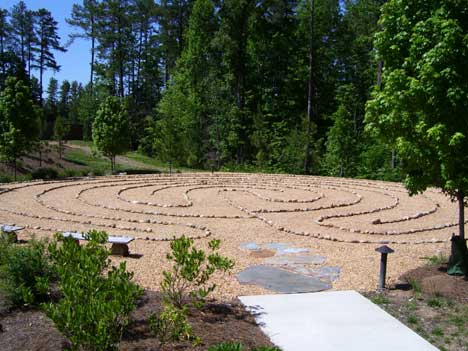
The Labyrinth at Duke Integrative Medicine

The Labyrinth at Duke Integrative Medicine

It’s hard to believe, but Sunday my training came to an end and my friends and I were sent out into the world, certificates in hand, as Integrative Health Coaches. This last four-day module flew by, but fortunately we had plenty of time and space to reflect on and celebrate our four months together.

As with the previous modules, there were fascinating presentations (on Genomics, Spirtuality and Health, Business and Marketing) and opportunities to learn, practice and review coaching skills. It was the final module, though, so the major theme was “next steps,” as in: “What are you all actually going to do with this training, and how are you going to do it?” Of course, each of us has a unique answer to that question, and some of us (me!) are still trying to figure it all out.

To all those who’ve been following these posts to get the “inside scoop” on the training program, here’s the bottom line: It’s excellent. If you came across the description on the Duke website and thought to yourself, “This sounds amazing, but I wonder if it’s really worth it”—It’s totally worth it. There were a few participants who struggled at times and voiced some minor criticisms of the program privately, but everyone of them also expressed deep gratitude for the experience as a whole. Of course, no training will meet everyone’s needs and expectations. That said—I’ve been around the block a few times and have participated in trainings sponsored by mainstream, respected institutions, as well as a few interesting, yet kinda New-Agey/Woo-Woo affairs. This Integrative Health Coaching training at Duke Integrative Medicine has been hands-down, THE BEST. Solid, grounded in rigorous research, expertly crafted and delivered, and yeah, a little touchy-feely at times. But the mushy stuff came from a place of such open-heartedness and authenticity that it softened even the prickliest of us.

Most of all, though, this training was about the people—both those who instructed us and the forty or so of us who came from all over the country to form this community of kindred spirits. Many of us will continue to network and work together as we carry our visions forward in the world. What an amazing group of people! Thank you all.

If anyone has further questions about anything, feel free to comment here or email me at “robert dearborn at gmail dot com.”

Jon Kabat Zinn’s Science of Mindfulness

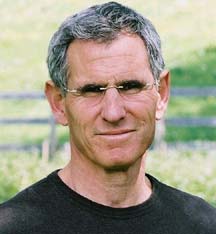
jon-kabat-zinnI recently listened to this great discussion between Speaking of Faith host Krista Tippett and secular meditation teacher and clinical researcher Jon Kabat-Zinn.

I’m a HUGE fan of Jon Kabat-Zinn. He has a way of cutting through the fog and getting right to the essence of what mindfulness is all about. He doesn’t rely on jargon or woo-woo spiritual concepts. He expresses an embodied understanding of what it means to be present to one’s life, to pay attention to the here and now of direct experience. He also has a firm grasp of the growing body of scientific evidence on the many health benefits of meditation.

One day I will attend one of the retreats/workshops he gives through the UMASS Center for Mindfulness.

Enjoy the discussion!

[Also, check out this October 11, 2007 Google Talk---one of the best introductions to mindfulness I have ever seen]:

Greeson Presents Duke Integrative Medicine Research to US Lawmakers

The following is a news update from Duke Integrative Medicine:

“Dr. Jeffrey Greeson Presents Duke Integrative Medicine Research to US Lawmakers: Improving the Nation’s Health through Behavioral and Social Sciences Research Poster Session Sponsored by National Institute of Health

Dr. Jeffrey Greeson was invited to present the research underway at Duke Integrative Medicine on April 28, 2009 during a session on Capitol Hill sponsored by NIH. The focus of the session was the role of behavioral and social science research in producing change — including change in health and behavior.

Greeson was one of only three people representing the National Center for Complementary & Alternative Medicine (NCCAM). Among the 27 NIH agencies represented, others included the National Cancer Institute, National Institute on Aging, and National Genome Research Institute.

Greeson presented preliminary findings from his study on how Mindfulness-Based Stress Reduction (MBSR) works to enhance emotional well-being and sleep, two factors associated with cardiovascular disease risk. He is collaborating on the study with Drs. Ruth Wolever, Jeffrey Brantley, and Janna Fikkan, all of Duke Integrative Medicine.

The Coalition for the Advancement of Health Through Behavioral and Social Sciences Research (CAHT-BSSR) planned the event featuring social and behavioral science research supported by the National Institutes of Health (NIH). The event – NATIONAL INSTITUTES OF HEALTH: Improving the Nation’s Health through Behavioral and Social Sciences Research – featured posters of NIH-funded research. Members of Congress, their staff, the biomedical, the behavioral and social science research community, and the public attended the event.”